Cystitis Tips for the Female Cat

Cystitis in cats is an all too common occurrence, especially with inner city cats. All cats with cystitis should be seen by a veterinarian as typically this condition responds well and more quickly with medications.


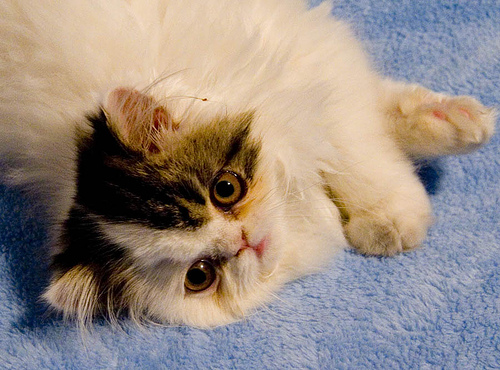
Below are my recommendations for both aiding the treatment process and also in helping to prevent this problem.

Treatment aids

  • Ensure that the litter trays in your house are thoroughly cleaned as they are used. Cats are very clean animals and in my experience are extremely reluctant to pee when all is not well with their toilet area! Cats with cystitis need to pee when they need to so that the inflammatory proteins and other irritating factors are removed from the bladder.
  • Whilst your cat has cystitis, use a tinned food as this has a much higher water content than dry. By increasing water intake, this acts to flush the bladder through, again removing the irritation from the bladder more quickly
  • What I also find particularly useful is asking the owner to add extra water to the food by turning the faucet/tap on quickly for a split second over the food. This adds an extra 10ml of water in each meal, therefore increasing the flushing of the bladder.
  • Remove your cat from any causes of stress. Stress has been intrinsically linked with cystitis in cats and so by removing that cause we see a much quicker resolution. Keep your cat indoors if tom cats are making her upset, keep her in a quiet area of the house if building work is going on, Try to limit her exposure to a noisy baby and introduce her to friends and room mates slowly.
  • Ensure you take your cat to the vet as soon as you see the characteristics signs of frequently trying to urinate, blood in the urine, repeated visits to the litter tray or an increased thirst.
  • Talk to your vet about supplementing the diet with bladder protectants
  • Try to collect some of the urine so that your vet can check to see if there are any crystals present. Often these types of cystitis can be managed by diet alone.


------------------
Dr David Brooks
WhyDoesMyPet.com

photo source

Moving House with Your Cat-The Settling in Period

Q: I just moved to a house that was vacant for over a year and a few neighborhood cats think it's their territory. One of them is much bigger than my cat and has attacked my cat three times now even though my cat ran under the house to get away. Is there anything I can do to signal to these cats that this is not okay territory for them to be in anymore? When I am here I yell and spray the hose but most of the time I'm not here. I've had to keep my cat indoors whenever I leave and this is not a good permanent solution. My cat is female and she is neutered. I believe that the other cats are non neutered males

A: It's a difficult question I am afraid and one that is asked a lot. Whenever a new cat enters an area there is disruption and usually plenty of fights until everyone found their place. Your situation seems more difficult if these other cats consider your house to belong to them.

The first thing to say is that given time things should improve, and one option is no action at all, wait until everything settles down naturally. It will help if you are making it clear to these cats that you don't want them there. Water spraying and noise is a good plan to deter them. There are also a whole selection of other deterrents available, none of which I have had any experience of I am afraid, but maybe worth a try, a lot of them seem to be electrical, upsetting intruders in various ways -if you can find one with a short range that you can use around your house (without affecting your cat, or the ones next door) then that could help move them on, or at least put them off trying to occupy your land.

Do you have a cat flap? They can work well to provide your cat with access to the safe haven of home and magnetic collars can give them their own key so noone else can come in. It doesn't solve your problem but it will make sure that whilst things are settling down your cat will have an escape route.

Do you think the cats are feral? If this is the case then you may be able to get a local animal charity or animal warden to remove them (depending on where you are). There are a lot of programs of stray animal capture, health checking and neutering which you may be able to point in the direction of your neighbourhood.

I should point out the health risks to your cat, bites can result in abscesses, and so any wounds should be treated by your vet. It is also essential to make sure she is fully vaccinated so that she is not put at greater risk from viral infections (especially if they are stray). Feliway, is a pheromone mimicker which will help to relax your cat during this stressful time, do not under-estimate stress, we know that in cats it can be responsible for many health issues.

I suppose another option is to resign yourself to having a house cat, they can be just as happy, don't feel guilty in the short term, she is probably really glad that you have closed the door safely behind her.

-----------------------
Dr David Brooks
WhyDoesMyPet.com

Photo source

Wild Cat - Felis sylvestris [photo]


Wild Cat (Felis sylvestris), originally uploaded by Alex Hedger.


Although they look a little like a tabby these wild cats are related to the lynx - they have a bushy blunt ended tail with black rings that distinguishes them from domestic varieties.

This was taken at the British Wildlife Centre, they are now close to extinction in the UK and only live in the Scottish highlands.

How To Stop Your Cat Spraying

The cat backs up to the door, lifts the tail and releases a fine spray of urine. Yes, your cat is spraying. You have a problem. But one you can solve.

Figures from the British Association of Pet Behaviour Counsellors say that aggression in dogs and marking behavior in cats are the biggest behavior problems in the UK pet population.

Spraying is marking behavior, not a litter box problem. Sprayed cat urine contains pheromones, a substance that animals use to communicate. Combinations of pheromones work like fingerprints: they identify the cat.

A spraying cat marks his or her territory with cat urine. It simply says: ‘This is mine’. You may not like it, but getting angry doesn’t help. It may even have an opposite effect: more spraying.

Cats in heat are attracted by the odor of cat urine. For them, spraying is something like an invitation to love. The results may be there in 65 days: a nest of cute little kittens.

Cats do not only spray during sexual encounters. Some also do it during conflicts with other felines, or when they are stressed.

For people the scent is far from pleasant. Thankfully most cats spray outside. But what if you have a cat spraying inside? Do something about it! And yes, that is possible.

The most radical and effective thing you can do is neutering or spaying your cat. Most castrated toms stopped spraying from the day they were operated.

But maybe you have a reason not to neuter your cat. In that case try to find out why your cat sprays.

Maybe it sprays only when it sees another cat. Solution: block the view. Or it sprays because of a conflict with another pet. Keep them separated and problems might be over.

If you don’t know why your cat sprays, discuss it with your veterinarian. Chances are he will advice you to spay or neuter. But your vet can also check if there is a medical problem.

Anyway, do not leave this problem unsolved. Cat urine odor and stains can make your home a very uncomfortable place, and your cat will still remain a cat even when it doesn’t spray anymore.


---------------------
Marc de Jong
cat-pregnancy-report.com

photo source

Picking the Perfect Persian Cat

The exotic and majestic appearance of the Persian cat captures the attention of cat lovers everywhere, making it one of the most desirable breeds of cats today. Their dense and lush long-haired coat, short legs and broad head with round eyes and flat muzzle faces are distinct physical traits that make them easily identifiable to just about everyone.

According to the Cat Fanciers' Association, there are seven main categories of Persians. You can visit their web site for specific information on each group and view pictures.

1. Himalayans

2. Solid Colors

3. Silver and Golden

4. Calico and Bicolor

5. Smoke and Shaded

6. Tabby

7. Particolor

Within these categories, there are many colors and variations. The many different kinds of Persians that are available permit anyone to pick the perfect companion. However, before running out and snatching up the first Persian you see, there are several factors for purchasing a Persian you ought to consider.

First, give some thought on how this new addition will get along with any pets you already have. Then assess if you are able to take the time to groom this cat properly everyday. The next issue might be the hardest thing to decide. That is narrowing down which of the seven types of Persians you like the most. However, once that is resolved, you could even settle on the color you would prefer. After that, you may have a partiality for the specific sex of your pet. A significant issue to consider is if you intend on entering your cat in show competitions or if you are just looking for a buddy. A show quality Persian will generally cost more.

Depending on your personality and time constraints, do you want and are you able to raise a kitten? Then you will want to locate a reputable breeder. This is an important matter because the better the breeder, the better your chance of acquiring a strong and healthy kitten. See if the kitten appears to be well taken care of and is being raised in clean surroundings. Has a veterinary done a complete checkup for health problems and is it up-to-date with shots? Is the breeder aware of any genetic conditions that may run in this kitten's pedigree lineage? Remember to obtain a health contract or guarantee from the breeder. A honest breeder will have no problem supplying you with one. Additionally, you will need the vaccination certificate. If the kitten is registered or you are planning to register it, you will need these papers from the breeder too.

Perhaps you are leaning toward an older cat. Adopting from a shelter or rescue could be a rewarding experience, not to mention saving a life. Just realize that this cat might have been abandoned due to a major health or personality problem. Ask a lot of questions and spend as much time with the cat as you can to determine if it will be a good pet for you.

No matter what cat you ultimately select, by doing your homework and being honest with yourself on your particular personality and situation, picking the perfect Persian can be a fun experience that later grows into a long loving relationship.


-----------------------
Andi Wize
dog-and-cat-training.com

photo source

Cute cat alert! [photo]


Cute cat alert!, originally uploaded by swardraws.

Sure she looks cute here but look into her eyes, nothing but trouble ;-)

The Perfect Companion - Advice For Those Thinking Of Adopting A Cat

Kittens are adorable. Of course they are. There's no denying it. But if you are thinking of extending your family with a cat, it might be worthwhile to consider adopting a slightly older feline. There are a great many out there, longing for a good home, and they offer plenty of love and joy.

If you are thinking of adopting a cat, there are a few things to consider to help you make the perfect choice for you and your family.

- Kittens take up a lot of time and energy. They need to be litter tray trained, might delight in climbing curtains and your new sofa, need lots of attention, need their shots and could take a bit of time to learn the rules of your household.

If you do not have this time, and a good amount of patience, it might be a good idea to go for an older cat. The life expectancy of an indoor cat is estimated at between twelve and eighteen years, with some cats reaching the age of twenty or older. The life expectancy of an outdoor cat is estimated at somewhat shorter, because they tend to be exposed to more risks. It can safely be assumed that you will share many wonderful years together.

And older cat will be somewhat calmer. They tend to only need to be pointed at where the litter tray is in their new territory and where the food and water bowls are. Some time of adjustment can be expected, of course. Some cats will hide for a few days, whilst some go explore immediately. They can be left alone easier than a kitten can, which would suit people with careers.

- If you are offered a cat by family or friends, you know where and how they have been raised, any problems, behaviour towards children, cats and other pets. Such knowledge is important, the relevance of each bit of information depending on your personal circumstances.

- There are many other places where one can adopt a cat. Most will have obtained a history of the feline, so that you still have access to the information listed above.

Many shelters will have given incoming cats a health check and any needed medication and shots. Most will neuter/spay cats as well, if this has not been done before. Some will even "chip" cats ( a tiny device placed by a vet just under the skin between the shoulders, which is encoded with a unique, permanent identification number.)

You can expect shelters to require a donation or fee when you adopt a feline. This is to cover the costs for medical care, food and shelter. Many shelters do not receive any funding, and therefore are reliant on these donations/fees to keep the place running.

- When you have chosen where you want to look for your perfect furry friend, it is advisable to take members of your family with you - they will have to share their lives with the cat, too! With children, this might cause the issue of wanting to take every single feline in the shelter back home, but this can quickly be overcome in the search for the one special cat you all connect with.

Take your time, have a good look around. If you have children, and you see a shy feline firmly hidden at the back of its cage, refusing to surface and staring at you with a rather wary look, this may not be the cat for your family.

Search for a cat who comes to greet you and looks happy to be around you and your family members. It is likely that you will have a happy future together. Ask the people at the shelter for any background information on the cat, any medical information and anything else that is relevant. They will be happy to help you.

If you have some time available, and can offer a lot of patience and a quiet environment, that wary cat I mentioned might be worthwhile looking into. If you manage to earn its trust, you could see a big change and might have a devoted and affectionate friend for years to come.

- Do not be offended if a shelter asks you questions or even wishes to come on a home-check to see how your new friend has settled in. This is standard procedure for many shelters, and is carried out to assure both you and your feline are happy with your new lives together.

Cats make wonderful friends and can really enrich people's lives. I wish you the best of luck in finding your new feline companion!


----------------
Kit Marsters
PetLovers.Com

photo source

Focused [photo]


_DSC1001, originally uploaded by *AStarWithin*.

Lovely caption!

Cat Care for Older Cats

How time flys! If you kitty is over 10 years old he is considered old! You may be aware of this fact but what you may not know is how to care for your aging kitty. What are the best ways to keep your older cat healthy and happy as well as active during thier latter years. Some questions might arise such as, should I change the food I have been using? You might wonder how to keep your cat healthy through exercise? What about medical care?

When a cat ages, its body goes through much the same types of changes that we see in humans. Cat care becomes very important at this time. For example, there is a natural decrease in muscle mass, along with a coinciding increase of body fat. If you are not careful and take early action these changes can lead to an overweight kitty! Because the energy needs of the typical cat begins to slow around the ages of 7 to 9, changes in food intake and exercise must be made to prevent the cat from become unhealthy.

Nutrition in cat food is a very critical aspect of cat health and cat care. Strolling down the cat isle at the pet store will present a vast array of cat foods for every kind of situation. The elderly cat is not left out. It is very important that you choose a food designed for your cats age. Food for older cats will contain less calories and protein and more of the vitamins and minerals an older cat needs. A quick call to your vet can help you decide if you are not sure which one to pick.

Sometimes you may not be sure if your kitty is officially a Sr yet. There are some signs that you will want to keep an eye on. When a couple of these traits begin to be apparent you know its time to make some changes. Is your cat moving slower than the past, does he sleep more than years past, is your cat unable to jump up on things that use to be easy for him? These can all be signs of an aging cat. You may want to consider things that can make life a little easier for him at this time of his life. Pet steps can help a cat get up on a bed that is too high to jump on now. A comfortable, plush cat tree with a cat house can make for restful naps and a place to hide out in.

Arthritis in older cats is a big issue because as cats age the absorption rate of calcium into their bones becomes inadequate. A general rule of cat care is that arthritis becomes an issue for cats at about the age of 12, even earlier if the cat happens to be obese. If your veterinarian diagnosis your cat with the painful illness of arthritis, there are some steps that can be taken to minimize its effect on the cat. For example, this can often be treated with a combination of weight loss and medication. Sometimes its just a fact of growing old and the only thing we can do is make things a little easier for our old friend.

As your cats age progresses, cat care becomes even more crucial. When a cat becomes very old, it can suffer loss of sight and hearing, just like humans. And, just as with older humans, cat care becomes a little harder at this age. Care needs to be taken to make sure the cat is as comfortable as possible.

The teeth of your cat can present cat care challenges as he gets older. As with all of us, the older we get the more dental problems we have. Be sure you are doing all you can to keep your cat's teeth healthy. See our cat care article on cat teeth. One good way to help a cat keep healthy teeth is by feeding him hard cat food most of the time.

How old is your kitty compared to human years?

1 year = 20 years, 2 years = 24 years, 3 years = 28 years, 4 years = 32 years, 5 years = 36 years, 6 years = 44 years, 7 years = 48 years, 8 years = 52 years, 9 years = 56 years.


----------------------
David Lee
Ace Cat Health & Furniture


photo source

Keeping Your Pet Safe This Christmas

Things change at Christmas time - new people come to your house with strange new things, you rearrange furniture, add new things like trees, get more tired, and pay less attention.

All these things can confuse your animal companion causing them to do things they ordinarily wouldn't do, and also bring harm to themselves.

Since it has been my fate to learn from experience, sometimes vicariously, sometimes straight-on, I'll include examples which I hope this article will keep you from having to experience.

1. Keep careful track of visitors' possessions.

People bring all sorts of things in their suitcases and purses, like nitroglycerine and sleeping pills. Keep purses and luggage up off the floor, and in the case of cats, closed and latched.

Or you'll end up at the vet's, as I did one year, when Thisbe smelled chocolate (Ex Lax) in my mother's suitcase and ingested enough to kill her, said the vet, who was surprised she survived.

Or your dog may, for reasons known only to him, urinate in your father-in-law's suitcase, marking I suppose, though he knew better!

2. Pay attention to the gifts under the tree.

People wrap food dogs can smell that you can't, but then again it doesn't have to be food. Chucky tore open packages of bath powder, perfume and bath salts as well. If you catch Fido nosing around, remove the package to somewhere safe.

Chocolate is a special culprit. It contains theobromine which is poisonous to animals.

3. Keep your animal companion on their regular regime and diet.

Don't, like me, carve the rib roast tossing the fat down to Shy Nell, then carry it in to the table, begin the feast, and have Shy Nell enter the dining room and proceed to vomit it all up, sending one of your guests to the restroom. Try working that into the dinner table conversation!

4. Protect your animal companion from new people and vice versa.

Guests can agitate and excite your pet so they get in trouble, do bizarre things, and also harm people.

There are people like me who don't know what they're doing, stick their hand in the bird cage to acquaint themselves with your Macaw, and ... "the Macaw uses its bill to score and then, in steel-cutter fashion, shear the nuts in two so cleanly that the cut surfaces resemble the work of a metal-cutting saw or laser ..." and it's ho-ho-ho, off to the emergency room we go.

5. Don't let your pet eat all gifts that are presented!

The houseguest from hell, I brought homemade dog biscuits for my relative's Labs, which they duly ate ... and we were all up all night as the dogs struggled with fulminating diarrhea.

6. As my cousin and his wife settled down for after-dinner drinks at a festive dinner given to impress his boss, Weisschen, the regal Persian, rolled into the living room and proceeded to hack up ... poinsettia leaves. Holly and mistletoe are poisonous to both humans and animals and poinsettia, though not technically poisonous, doesn't sit well. Keep them out of your pet's reach.

7. Watch your animal pet around the Christmas tree.

Woody was sick the week before Christmas. We didn't know why, but he sickened and paled, and soon we were off to the vet's ... for major surgery costing $1,000, and which yielded 3' of tinsel, pulled from his intestines. That stuff (and many other things on the tree) is made of metal. Many pets try and ingest the pine needles that fall.

8. Secure your tree.

This is for your protection, so if the cat decides to leap, or the dog is fascinated by some ornament, the whole tree doesn't land on the floor. Also don't put anything in the tree water as a "preservative" that could harm your pet.

9. Rabbits like to chew electrical cords.

Cover your cords with duct tape and get them out of the way as best you can.

10. Tranquilize your pet or tranquilize their environment.

Bing just got hyper when company came. Something else difficult to work into the dinner table conversation is when Bing gets up, ambles over, and tears the sleeve off your guest's shirt. You can buy tranquilizers for your pet, or secure them in a special room, put them outdoors, or take them to the kennel if they're the excitable type.

11. Guard against escapes!

Weejums who lived with us for a while, was always looking for his chance to escape, and the holidays were the most exciting time of the year for the little rascal. Oh the opportunities! If you have such a knave in your house, make sure they have their tags, and explain to the kids and to houseguests, to please take care when they enter and leave the house.

12. Talk to your houseguests, who are more under your "control," and keep your eye out for your other guests.

Or your pet companion may end up with an injured tail and bad memories like Muff Tuff, who was sleeping near the rocking chair; or internal injuries and bad memories like Stan-the-Man, who got stepped on by someone wearing bifocals.

BOTTOM LINE: You're busier and preoccupied, things change, it's a good time to stop and think, for the safety of your animal companion. They're counting on you! Be there for them at Christmas and all the year.


-------------------------
©Susan Dunn, MA, The EQ Coach.
For coach certification program: sdunn@susandunn.cc

photo source

Cat conversation


Cat conversation, originally uploaded by Jane Gribbon.

Have you see a tail anywhere, mine has gone missing ?

Is the cat nibble under my right paw or my left ?

Hey, look at me !


Hey, look at me !, originally uploaded by Jane Gribbon.

Pet Health Insurance: A way to care your pets

Owning a pet is one of the most common features that can be seen in almost all our households. And for most pet owners pets are a part of their family. But at the same time it has become one of the most expensive affairs. It is because of the treatment or the care they may need during their lifetime. Apart from the day-to-day costs of feeding and keeping your pet in good condition, there are many unplanned costs that include vets' fees during operations and accidents, which you might find difficult to cover. Because of this, it's a good idea to buy a pet health insurance policy which will protect both you and your pet. Pet health care insurance is a policy where the insurer will pay you for the covered costs of the treatment of your pets and in the return you have to shell out a certain sum of premium to the insurer at regular intervals.

There are different insurance companies that offer various health insurance policies and you can opt for the best policy that will suit your needs and family status. There are different health insurance plans for cats, for dogs and for your other pets. Policies vary from one company to other company.

And also the rate of premiums varies from company to company. Usually the policies under veterinary pet health insurance are cheaper for dogs and cats but little higher for other pets such as horses, rabbits etc. So before handing over your premiums to an insurer who provides pet health insurance, it is important for you to do a detailed research of all these information. Hence we suggest you to shop around a little. Now with online facilities on pet health insurance in UK it is easier to search and shop.

It is imperative to keep in mind that most pet care health insurances available in the market do not pay for routine check ups like worming, flea control nor is it likely to cover the pre-existing medical conditions that your pet has been suffering.

Apart from that, for some diseases and treatments that may need a long time, say more than a year, it is necessary to renew the policy at the end of the year. If not, you will loose your claim and the policy may end all together. The best time to buy a pet health insurance for your pet is when it is little, say for instance, 8 weeks old, because it is difficult to get maximum cover at the middle age. Thus according to the pets you own its high time for you to buy a dogs health insurance or cat health insurance or any other pet insurance as soon as possible.


------------------------
Jenny Blackn
healthinsuranceuk.org.uk

photo source

Hyperthyroidism in Cats

Veterinarians tell us that hyperthyroidism is very common stype of hormonal disorder seen in older cats, and even some middle aged cats. This occurs when the thyroid glands begain producing large amounts of thyroid hormones. Often this happens as a result of a benign throid tumor (adenoma); however, vets doe not know what causes the tumor to develop in cats.

For informational purposes, thyroid glands are paired glands located in the neck and they secrete thyroid hormone. Thyroid hormone is important because it controls metabolic rate of an animal. Cats with hyperthyroidism have an increased metabolic rate, and thus they tend to use up excessive amounts of energy within their bodies. This means that your cat may be eating more and always hungry, but still seems to be losing weight. This is one of the most common clinical signs of hyperthyroidism. Some other signs may include a patchy haircoat and hyperactivity. The onset of this disease is usually very slow, and signs are usually not recognized until they are severe. Sometimes, the hyperthyroid state can exist for months to years before becoming severe enough for the owner to recognize the clinical signs.

Many times, a veterinarian can feel a nodule in your cat's neck where the thyroid gland is located. This is usually indicates your cat has hyperthyroidism. The diagnosis can be confirmed by testing the T4 (thyroid hormone) levels in your cat's blood.

If your cat is diagnosed with hyperthyroidism, there are a few treatment options: There is medical treatment, surgical removal of the thyroid, or radioactive iodine treatments.

With medical management, this consists of the administration of anti-thyroid hormone drugs. However, this will not cure the disease but will provide for long term control of the disorder. These drugs will probably have to be administered twice daily for the rest of your cat's life.

With surgical thyroidectomy, this involves the removal of the affected parts of the thyroid glands, and this can result in a permanent cure--but there can be complications. As with any surgery, there is always a risk with anesthesia. Hyperthyroidism can recur if some of the remaining thyroid tissue becomes hyperactive. A common secondary complication of surgery is accidental removal of part or all of the parathyroid glands which are small glands sitting next to the thyroid glands; and this results in a hypoparathyroid state. This can result in transient hypocalcemia that may be need to be treated for a few weeks or months.

Radioactive iodine is the last treatment option. This works because the thyroid gland takes up the iodine whereas no other body tissue does this; and the iodine kills all of the affected thyroid tissue. All other body tissues are spared and this can be a cure as it does not have any major side effects for the cat. Not, however, this must be performed in a facility licensed to handle radioactive substances. A university teaching hospital is a common place to perform this. Also, an extended hospital stay for your cat is usually required. Most of the excess radioactive iodine is eliminated in the cat's urine. The cat is kept in isolation until most of the radioactivity has been eliminated.


--------------------------
L Johnson
HowtoTrainYourDogs.com

photo source

Cat Training - The Meows And The Purrs

A Cat 'meows'. Yes it sounds so good but if it meows loudly and continuously, then the same sound becomes irritating. What do you think the reason can be? Is it hungry?

YES and NO

Yes, hungry, it can be, but apart from this there can many other reasons, why it is 'meowing'. The reason may be anything it may be because it is just bored, or can be because it has suffering from some kind of discomfort or has some medical problem.

What should you do it she keeps meowing? Offer her milk...

No! You should not offer her any food when it is incessantly meowing, as it will think that this as a kind of reward and would keep meowing... This will increase its bad behavior and would affect the relationship between you and the cat.

Offer it food, when it stops meowing, this will be registered in its mind, that if it does not meow unnecessarily, it will be rewarded. You will need to get your cat to learn when it is appropriate to meow, when they really need something. You need to see that all the cat needs is always available to it, as far as possible. This would mean your cat will do less meowing.

Cats are usually lazy and would not exercise by themselves. They love to cat nap all day long. You need to set up a playtime and a play area. Keep Strings, ball, catnip items, or simple home made items that your cat will love. See that the items kept are without any sharp edges which might hurt your pet. This will help it get into a good habit of keeping itself occupied while you are busy with something else.

You should spend sometime in a day and preferable keep it same time everyday. A good time would be when you return home from work and you want to relax. It is proved that playing with or just stroking cats helps one relax and keeps blood pressure under control.

Purring is another characteristic of a cat. Purring signifies that the cat is content. Follow this with caution as purring does not always signify that the cat is happy. Cats also purrs if they are ill, sick or dying. Pay close attention to your cat, when it is purring and check for any physical signals which might suggest that it is not feeling well.

If it stops purring, that too signifies that it has some discomfort maybe it may be sick with a virus or something could be making her feel sick. These are signals to suggest you that seek the services of a veterinarian and have your cat examined. Non-purring may also happen when cats get older or maybe the purring is so soft that you are unable to hear them it.

As in humans, emotions play a very important part of a behavior in your cat. Fears, grief, compassion, jealously affect the behavior of your feline friends too.

  • As fear is intimating to us so is it for them, it may have a fear of getting hurt or may be afraid of another animal.
  • Cat would exhibit grief, when something tragic happens to it like loosing its owner, the same way as we do when we loose our near or dear ones.
  • Cats have compassion for other cats.
  • Your meowing and purring pet also turns green with jealousy if it has to share its owner, home, toys or food.

It is these emotions, you need to consider, when you are training your cat. It would be disturbed and might resort to excessive meowing and refuse to listen to its master. When they show the signs of being emotional, you need to find what is affecting their behavior.

Are they hurt or are they ill or is it just their bad behavior

Cats, being emotional, need your attention all the time. You need to observe, if they are satisfied with the location, they are comfortable with other pets or other members of the family and you should always be aware of their actions.

Training a pet is tricky. It is Time and Patience which will help you through. They are to be treated like our children, teach them good behavior and ignore their bad attitude.

Reward your cat for being good. You need to give time to your cat to teach them how to play with toys and other items which you have kept for their playing. Always feed you cat with healthy food; these will ensure good medical condition and happy-content behavior.

Get toys which they would practically like to play with. Do not go in for toys which you would like them to play with.

Love them, Hug them and be kind to them, and you would be able to share the most beautiful relationship.


-------------
Son Ngo
vkhowto.com

photo source